
When the Charge Is Right, Everything Gets Easier
You can have the cleanest install, perfect airflow, and tidy wiring… then the system still feels “off” because the charge isn’t right. It might cool, but it’s noisy. It might pull down, but it’s slow. It might run, but pressures bounce and you don’t trust what you’re seeing.
That’s where a proper refrigerant charging scale earns its keep. In the real world, “close enough” charging is what creates call-backs. A scale turns charging into a repeatable process you can trust, especially on modern systems where the difference between “okay” and “spot on” can be small.
This buyer guide is written for Australian tradies and techs who want clean, practical answers. We’ll cover what matters when choosing HVAC charging scales, including accuracy, capacity, and whether Bluetooth/app features are actually useful for the way you work.

If you want to browse options while you read, start here: refrigerant charging scales for accurate HVAC charging in Australia.
A scale isn’t just for “adding gas”. It’s also your best tool for proving how much you recovered, how much you charged, and whether a cylinder actually had enough left to finish the job.
What a Charging Scale Actually Solves
When someone says “do I really need a charging scale?”, they’re usually thinking about the old habit of charging by pressures alone. Pressures and temperatures still matter, but a scale solves a different problem: control. It tells you exactly how much refrigerant moved from the cylinder into the system, or out of the system during recovery.
That matters because most service issues aren’t “massive undercharge” problems. They’re small errors that stack up. A few hundred grams off can turn into long run times, unstable superheat, nuisance trips, or a system that never feels quite right. A digital refrigerant scale gives you a baseline you can repeat on every job.
It also helps with cylinder reality. You’ve been there: you turn up thinking you’ve got enough refrigerant, then the bottle is lighter than expected. With a scale, you can confirm what’s left before you commit to a full charge process.
Accuracy, Resolution, and Repeatability
There are three words that get mixed up a lot: accuracy, resolution, and repeatability. In a buyer guide, this is where you want plain language, because these differences affect real jobs.
Accuracy is how close the reading is to the true weight. Resolution is how small a change the scale can display. And repeatability is whether it reads the same way every time in the same conditions.
On site, repeatability is often what saves you, because you can trust the process even if the environment is messy. Scales live in vans. They get knocked, loaded, and used in heat. If your scale is “accurate on day one” but inconsistent on day thirty, it becomes a frustration tool instead of a confidence tool.
If your readings feel jumpy, don’t blame the scale first. Check the surface. A wobbly platform, soft ground, or a cylinder touching a wall can make the weight “wander” and waste your time.
Capacity and Platform Size
Capacity sounds simple until you’re on the job with a bigger cylinder than usual. If the platform is too small or the max load is tight, you’ll fight it all day. A good charging scale should comfortably handle the cylinders you actually use, not just the “best case” in a clean workshop.
Platform size matters for stability. If the cylinder base sits awkwardly, the cylinder can rock. Rocking cylinders give inconsistent readings. In the worst case, they tip and damage your gear or your toes. A solid platform and a stable base is not a luxury—on site it’s a safety and time saver.
Bluetooth / App vs Simple Display: What Changes on the Job
This is the modern question. Do you need a simple display you can read at the cylinder, or do you want Bluetooth/app viewing so you can see charge movement while you’re standing at the unit?
Bluetooth/app features are genuinely useful when access is awkward: rooftops, tight balconies, plant rooms where the unit is around a corner, or any time the cylinder sits in a safer spot away from the unit. If you’ve ever had to lean over a guard rail to check a display, you already know why remote viewing can be safer and faster.

Two examples you can use as reference points while comparing features:
Bluetooth-style workflow: Mastercool Bluetooth wireless charging scale for refrigerant charging work.
Charge-control workflow with solenoid: Mastercool wireless charging scale with solenoid for controlled refrigerant charging.
Tough wireless option as another reference point: Wey-TEK HD wireless refrigerant charging scale for HVAC service work.
Wireless and apps are useful when they reduce walking, improve safety, or help you control the last part of a charge. If your jobs are simple access with short hose runs, platform stability and readability usually matter more than extra features.
Workflow Control: Avoid Overshoot and Rework
The biggest time-waster is overshooting, then recovering to correct it. This is where scales designed around “charge control” can match the way some techs work, especially if you like tighter control in the last few hundred grams.

Best-Practice Charging Workflow: Weigh-In Without Guesswork
A good charging scale is only half the story. The other half is your method. Two techs can use the same scale and get very different outcomes if one is rushing and the other is consistent.
Start by setting the scale on a stable surface. Concrete is ideal. If you’re on soft ground, put a solid board down so the scale doesn’t sink or rock. Make sure the cylinder is centred on the platform. If it sits off-centre, the platform can flex slightly and readings can drift as the cylinder settles.
Zero the scale once the cylinder is stable. Don’t keep re-zeroing “because it looks off.” If it looks off, fix the physical setup first. Then charge steadily and slow down as you approach your target. Rushing the final part is how you overshoot and lose the whole time advantage.
Best-Practice Workflow: Weigh-Out During Recovery and Diagnostics
A charging scale is just as useful when you’re taking refrigerant out. By weighing the cylinder before and after, you can confirm the total recovered amount and keep your cylinder management safer and more predictable.
It also helps you spot odd jobs. If you expected a certain quantity and you recovered far less, that can point you toward a leak, a previous partial recovery, or a system that wasn’t charged correctly to begin with.
The Buyer Table: What to Look For and Why It Matters
This table keeps the decision practical. It avoids spec-sheet bragging and focuses on what makes a charging scale actually useful on Australian job sites.
| What you’re comparing | Why it matters on site | What to look for | Common mistake |
|---|---|---|---|
| Accuracy + repeatability | Lets you hit target charge without second-guessing | Stable readings across real job conditions | Trusting a “spec” while ignoring wobbly setup |
| Capacity + platform size | Stops rocking cylinders and overload stress | Comfortable headroom for your common bottles | Choosing a small platform that fights you daily |
| Bluetooth/app usefulness | Saves walking and improves safety on awkward access | Simple pairing and viewing where you actually stand | Paying for “features” you never use |
| Readability + battery | Fewer mistakes in bright sun and long days | Clear digits, backlight, reliable power | A display you can’t read, so you “guess” again |
| Workflow control | Prevents overshoot and rework | A setup that lets you slow down and stop cleanly | Charging too fast, then recovering to fix it |
Build a Cleaner Charging Rig (Scale + Hoses + Habit)
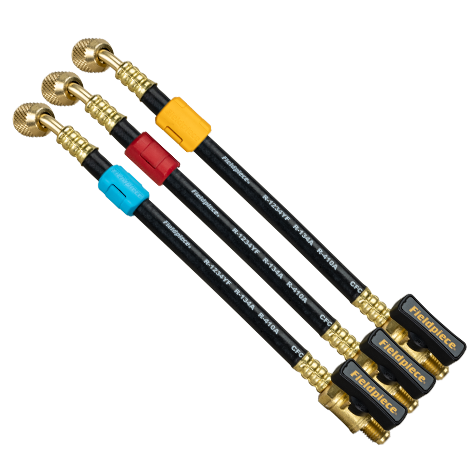
The best charging setup is not just “a scale.” It’s a small system: stable scale placement, sensible hose routing, and a consistent method you repeat on every job. That’s what reduces leaks, reduces contamination risk, and makes your results look professional.
If you’re refreshing your setup, keep it simple and relevant: charging hoses that support cleaner charging and safer hose routing.
Compliance and Record Keeping
Scales don’t replace good practice, but they make good practice easier to prove. When you can note “charged X” and “recovered Y”, your job notes get cleaner and your story stays consistent if anyone asks later.
If you need the official licensing reference point for refrigerant handling in Australia, use this: ARCtick refrigerant handling licensing in Australia.
Choose Once, Charge Right, Reduce Call-Backs
A charging scale is one of those tools that quietly pays for itself. It saves time because you stop guessing. It saves refrigerant because you stop overshooting and correcting. And it protects your reputation because your jobs finish cleanly and stay stable.
If you want to pick the right scale for your workflow, start with what you do most. Tight access and complex sites point you toward Bluetooth/app convenience. Straightforward installs point you toward stable simplicity. Either way, choose a scale you’ll actually use every time.
Browse the range here: HVAC Trade Supply charging scales for refrigerant charging and recovery work.